Barckwords

Barckwords
Click logo above to see more about Barckmann's fiction

Saturday, October 9, 2021

Book Reviews Previously Posted on Various Other Sites

Taming the Dragon

by Dan Armstrong 

Oct 11, 2019 


https://mudcitypress.com/dragon.php


i

Dan Armstrong's "Taming the Dragon" is a very good read. It tells the tale of an engineering consultant who is assigned to look at the Three Gorges Dam for some German investors back just before the huge dam was completed. It is really about the Chang Jiang (长江) or as it is often called in English, the Yangtze River. The Yangtze drains the slopes of the Himalayas, rushes passed Sichuan province through the heart of China's rice belt finally draining into the Pacific near Shanghai. Armstrong takes us up the river into the heart of China literally and figuratively. It is a great story about fixation and desire for both the narrator and China itself. It was set 30 years ago, so much of the story might seem dated because China doesn't need foreign investors to complete its mega engineering projects anymore. But still, there is a universal theme to the story. Like W. H. Hudson's "Green Mansions" also a story about a trip up a river, it shows what happens when we come face to face with our illusions and discover that ordinary reality is really much more enticing.


Portland Zionists Unite! and Other Stories by Eric Flamm


https://www.amazon.com/gp/product/1629015989

September 2, 2019 

Eric Flamm’s collection of short stories contains a powerful, informative, artfully intelligent story titled “Mauser Karabinder”. It reminded me of different aspects of two of Tolstoy’s masterpieces of short fiction, “The Cossacks”, and “The Death of Ivan IIyich”. Flamm's writing style in this story is slightly melancholic, yet accessible (in that Tolstoyian manner) that adds up to an encompassing 360-degree view of his subjects that leaves the reader stunned and in awe of the depth of the reading experience. It really is that good.

The other stories were excellent and very different from one another and serve as a nice supporting structure around “Mauser Karabinder”. All of the stories are longer, (30-40 pages), and deeply explore the experience of American Jews coming to terms with their Hebrew heritage. I am not Jewish myself, and I found myself engrossed in all of them.

The American Jewish relationship with Israel is present in all of the stories, and if you have ever thought about the American-Israeli political relationship in a casually critical sense, be prepared to get out of the kiddie pool and be thrust into deep water. Every aspect, from every point of view, finds a home with some character, (or in the main characters, many conflicting views, fighting for control in their own consciousness.)

The Portland stories, “The Mount”, and “Portland Zionists Unite!” are fun reads because I live just outside the Rose City and sorta, kinda, know the “types” he is talking about. “The Mount” is set in tony Northwest Portland, and revolves around young, well-off Jews who grew up in Orthodox or at least very conservative homes, that from the outside seemed cut-off from “normal” American society, but from the inside you see the struggle to be “normal” and the desire to escape from that lifestyle. The main characters, for the most part, all men, felt they were rebelling against Orthodoxy, while still fighting within themselves to maintain their identity. “The Mount” is an upscale Portland Synagogue, and the story gives an unsentimental look at the struggle within the community to define itself in the face of the new authoritarian reality of Netanyahu’s Israeli, and the response American Jews should have to it.

“Portland Zionists Unite!” is about a Millennial kid, Gary, whose mother “told him he was a Jew”, but who otherwise has little consciousness of his Jewish identity. Flamm catches the rhythm of Gen-Y dialog really well and is able to pump life into a believable portrayal. Gary manages a rental unit and encounters a struggling semi-Jewish couple who rent the duplex next door. It is a very believable story of the struggles, and relationships of youth in this current age of so much uncertainty.

As for the masterpiece of the collection, “Mauser Karabinder”, I am going to only say it is about an American Jew who enlists in the IDF and is doing occupation duty on the west bank in Hebron, protecting a tiny group of Orthodox settlers, surrounded by a sea of Palestinians. If you have seen the recent HBO series “Our Boys”, about retaliatory ethnic murders and the Israeli response to them, you will quickly get the picture of the setting. The story will blow you away.

Eric Flamm is a talented writer, and this collection is worthy of his talent. 


The War of Atonement: The Inside Story of the Yom Kippur War

by Chaim Herzog, Michael Herzog 

Jul 08, 2021 

https://www.goodreads.com/book/show/80124.The_War_of_Atonement


This account of the 1973 Arab Israeli war is full of facts and vignettes that were not previously discussed in the popular press. Chaim Herzog has a very interesting bio, which I urge you to look up on Wikipedia. But to summarize he was a prominent member of the founding generation of Israeli leaders, as a general, politician, and prominent Labour Party Leader. He was President of Israel for a period.


The account of the war is an hour-by-hour, day-by-day, dispassionate story of the two week long war. It was fought on two fronts, in the north against Syria, and the south against Egypt. In many ways it was a proxy fight between the NATO and the Warsaw Pact, with the weaponry and strategies of the two sides being tested out.


For Israel it was a life or death struggle. The first three days could have gone either way. It was in the middle of the Yom Kippur holiday, and it took Israel by surprise. Herzog points out all of the blunders of the Israeli intelligence establishment, of the political leadership, as well as its tactical and strategic shortcomings that led to the near disaster. He also praises the Arab strategy from a military point of view.


It also points out the sacrifice, and heroism that saved Israel. He explains the reasons for the superiority of Israeli pilots and tankers. He also says that dependence on tanks and airpower, while relatively playing down the importance of infantry and artillery was a serious mistake. It was also interesting to see his disdain for Ariel Sharon, a rising political rival at the time and of course eventual Prime Minister of the country. He points out that Sharon’s "primadonna" behavior led to some indecision as well as other problems on the battlefield initially, but in the end gives Sharon his due as a brilliant and fearless tactical general.

If you are interested in modern military history, this is a very good read.


The Oppenheimer Alternative 

By Robert J. Sawyer

September 20,2020


https://www.goodreads.com/review/show/3536989583


I like books that both entertain and inform and this Speculative fiction novel works on both levels. It is an excellent "biography" of Oppenheimer and the Manhattan Project. It is real history mixed with some very intriguing and imaginative speculation. The novel drills into exactly what caused "Oppie's" loss of security clearance in the Red Scare days. We get penetrating and entertaining portraits of the great scientists with whom he worked, including Teller, Einstein, Richard Feynman, and many others. The novel tells the story straight - with one wrinkle. Oppenheimer was a great physics theorist in addition to being the greatest "science project" administrator ever. His work related to the nuclear processes in stars, and (here is the wrinkle) in 1938 it was discovered, (using his theories) that - something bad was going to happen, a strong likelihood that the earth is doomed and soon, very soon.  The novel is a story of how all of the superstar physicists  of the Manhattan project worked to overcome their disagreements and come up with a plan to prevent the bad thing from happening.

The story is told in a non-sensational way, and this was its strength and perhaps its tiny weakness. It stays true to the plodding nature of the way real science actually works, and the manner that real history happens, and sometimes as a reader you want it "sexed up' a little. But I recommend the book highly because it will keep you engaged, and will teach anyone (whether they are experts in science or in history, or both) something profound and interesting. Sawyer proves again why he is a master.


Squeeze Me (Skink #8)

by Carl Hiaasen

Sep 20, 2020 


https://www.goodreads.com/book/show/50644565-squeeze-me


Hiassen finally turns Skink loose on the White (House) Whale. You knew it was coming, and it is a great and satisfying read. Melania is getting boned by a couple of Secret Service guys while the biggest Scumbag in American History is porking a local pole dancer over in a strip mall in West Palm. The old Palm Beach widows and divorcees plot to get invited to the Winter White House. There is a catch though - one of those rich bitches gets eaten by a python, and if the news gets out it will ruin the coming party season.

It says it right there in the title - Skink #8. If you love Hiassen when he is on the hunt for scumbags - environmental rapists, scam artists, hucksters, corrupt Florida pols and other lowlife frauds who plague the Sunshine State, you will like Squeeze Me. Skink - not the burrowing lizard, but the former Florida Governor,Clinton Tyree, former war hero, and highly popular Florida native. Tyree was run out of the Governor’s Mansion back in the 80s,  by the real estate lobbyists who didn't like him blocking their development projects. He retreated to the Everglades and pursued a career of unrelenting vengeance on the human trash who have been working to make Florida into America's trashiest combination amusement park and nursing home. This is the 8th novel Skink/Tyree  has appeared in and every one of them will give your spirit a lift, even if it is only fiction. It's a hilarious peek at life down in North America's infected appendix, where life after death comes early. Hiassen is a national treasure.


Lest Camelot Fall

by Danny Adams

Dec 11, 2015

https://www.goodreads.com/book/show/20566520-lest-camelot-fall


Danny Adams has written a strong historical novel about what happened after King Arthur died in battle and Excalibur was returned to the Lady of the Lake. It is interesting because it attempts to fuse what (little) we know from solid historical sources, while maintaining faith with the legend. The story puts a real context to characters whose only existence is confirmed by stories written some 700 years after the fact.


It takes place in the decade of 530-540. We know that at that time, the Eastern Roman Emperor Justinian was attempting to reconquer Italy, which had been overrun by various Germanic tribes over the previous century. We have a good deal of knowledge about the events and people in the Mediterranean area, but little about Britain. We know the Saxons have invaded to stay and have settled in the Wessex region of south central Britain but they are not really secure. Other Germans tribes are also on the scene, as well as the native Celts and the Romans who stayed after the Western Empire withdrew its troops.


Adams has a historical eye on all of this, but what I think the reader wants to know is what about the characters of Camelot? At this point Adams has to use his imagination to tell us their histories. Who was Merlin? How did he live so long? Who was the real Lady of the Lake? What was Arthur's parentage and who were his descendants in history? What were the ultimate fates of Guinevere and Lancelot?


Adams takes the myths of Camelot and blends it into what we do know of history and he does a very good job at it. He has altered my own internal map of that part of the world at that time. I think his vision is very sound.


His main character is a nephew of Arthur's, Lucian Flavius Aurelianus, whose ancestry is part Roman, part Celt. He tells the story as he journeys back and forth across southern Britain. First person narratives have the obvious strength of being immediate and camera-eyed on the action. The disadvantage of first person is you only see and know what the character knows. So all that history that Adams offers up must be told through the eyes of a Dark Age Royal Prince, who has his own issues that often blind him to the motives of the people around him. He is a young man with many insecurities.  These issues get in the way of him seeing clearly what his final place in the world will be. Lucian is petulant, quick to anger and full of self-doubt and guilt over his own hates, lusts and desires. So when he tells how a Saxon Camp is laid out, or discusses the religious squabbles of Pagan Celts and Christian Camelot, or explains new weaponry such as the crossbow brought in by agents of Justinian, this information-rich discussion causes the story to wait. As a serious history buff, I don't mind, but maybe other readers might lose the thread. Shifting that focus without the all knowing omniscient narrator is tricky.


But never mind that. It is a meaty book and I enjoyed it all. In addition to Arthurian lore and Dark Age history, Adams throws in lots and lots of allusions to Tolkien and Beowulf and probably much more that I missed. It is a work of a sound scholar and a good fiction writer. Well done.


Havana Bay (Arkady Renko, #4)

by Martin Cruz Smith

Oct 26, 2015 


 Havana Bay is about tramping the streets of Havana and I suspect that it will be a resource to understand the Cuba that is soon to disappear now that we Yanks are invading as tourists. Arkady has lost some of his fire I think - he is suicidal in the beginning, (over a horrible lose that will hit hard on long time readers of the series) and then seems to accept what comes afterward. It makes sense character-wise but it is like he is sleepwalking. There is a lack of tension in the story compared to some of the past Renko novels. But it is a wonderful story of the Havana streets and if you are going, this is the book to read to create your own adventure. Smith delivers the scene better than any of his contemporaries - after you read it you can see and smell the city. He did the same thing for Chernobyl in Wolves eat Dogs.


The Road Not Taken: Edward Lansdale and the American Tragedy in Vietnam

by Max Boot

https://www.goodreads.com/book/show/35187192-the-road-not-taken

Jun 30, 2021  


Edward Lansdale has an outsized reputation that has inspired conspiracy mongers for the last 60 years. Max Boot has written a somewhat pedestrian biography of the American “dirty tricks” empresario of our anti communist wars in the Philippines and Vietnam.


His biographer here, Max Boot,  immigrated from Russia with his parents when he was a young child, went to Yale, studied history, and is now a regular opinion correspondent for the Washington Post. He has had an interesting ideological journey, moving from staunch supporter of our incursions into Iraq and Afghanistan, to a harsh critic of Trumpism. He has been described as a “neocon”, a label he rejects. He has (of late) developed more liberal views on most domestic issues and is a strong supporter of the military and our recent wars. He recently recanted his support for the Bush-Cheney Iraq war debacle.


His biography of Lansdale is a fairly blatant attempt to revive the liberal/conservative American view of the “Third Way”, toward moving what were once called “emerging nations” away from Marxist insurgencies toward American style democracy. Lansdale, a former advertising executive, stuck in a somewhat loveless marriage, stayed in the Air Force after World War II and joined the precursor organization of the CIA and was stationed in the Philippines, a recently independent former American colony. The Philippines were ruled by landed families, but were beset by the growing threat of the Hukbalahap Rebellion (Huks) which began as resistance to the Japanese invasion in World War II and continued into the post war era of American predominance.


Landsdale met a Filipina woman during his tour of duty and fell in love. She remained his lover whenever he could see her during the next decades, even though he never got divorced from his American wife. She was a member of the elite class on the islands and through her he met many of the leaders of the landowning class, which was afraid of the Huks. Lansdale also met Ramon Magsaysay, a war hero during the fight against the Japanese, and an auto mechanic by trade. Even though the upper class didn’t like Magsaysay, Lansdale saw his charismatic open personality had the best chance to succeed in Philippine politics and they became great friends. Lansdale used this friendship to barter his way into a powerful position within the American intelligence community and Magsaysay became President of the Philippines. This “coup” launched Lansdale’s career.


The big story about Lansdale is of course in Vietnam. Lansdale was the supposed model for Graham Greene’s popular novel “The Quiet American”, and he also was allegedly portrayed positively in book and later movie “The Ugly American”. As the war got hotter and larger, Lansdale was stationed in Saigon and tried to use the same technique of playing the friend and power behind the throne to President Ngô Đình Diệm. And for a while it seemed to be working. But Diem was not nearly as charismatic as Magsaysay, and in spite of Lansdale’s efforts to popularize him among his own people, the effort failed. Diem and his brother, Ngô Đình Nhu were overthrown and executed in a coup in November 1963, with the tacit approval of President Kennedy. From then on Lansdale’s influence waned.


The thrust of Boot’s biography of Lansdale was that he was not the sinister figure that he has been made out to be in popular myth: That he was an open, friendly Californian with a salesman’s personality and a belief in the decency of American intentions. He was no intellectual but possessed a “can-do” attitude, and while he was complicit in some murderous treachery in jungle battles in the Philippines and did approve of assassinations during the Phoenix operations in Vietnam, his record was not nearly as murderous as it has been thought by some writers and conspiracy minded leftists. Boot goes out of his way to “prove” that Lansdale had nothing to do with the Kennedy assassination as has been alleged by some.


Boot’s political motive for writing about Lansdale’s (and he clearly has one, which really is a no-no for a serious biographer) appears to me to attempt to justify (or at least explain in the best possible light) American post-war anti-communist behavior in the developing world. He is trying to counter the prevailing left view that much of our problems today stem from our ignoring the popular will in other countries (like Iran, Cuba, Dominican Republic, Vietnam, etc) and imposing our will through force and connivance wherever we could. Lansdale, in popular culture, was a symbol of that post war American aggression and while Boot seems to show his warts, (such as his adultery), he really paints a pretty benign picture of Lansdale.


I learned a great deal from the book, especially about how Lansdale came to the forefront of American counter insurgency, and while it didn’t change my mind about the folly of much of American post-war foreign policy, it did disabuse me of some of what I thought about Lansdale.


I will say that for all his intellectual diligence, Boot is not nearly as self-reflective as he should be. He was a front and center cheerleader for our most recent misadventure in Mesopotamia that ended in disaster much as the Vietnam war did. Both wars not only killed vast numbers of people and destroyed much of their society, but they had a profound negative effect on our own country. Boot seems to hate Trump, as I do, but he doesn’t seem to realize that if we had never invaded Iraq we likely never would have had Trump. Bush-Cheney’s historic blunder is the most important factor in the fragmenting of our social and political cohesion as a nation and opinion molders like Boot still have a good deal of explaining to do. I appreciate Max Boot’s conversion but until I see a bit more contrition, (a’la Robert McNamara) I am not going to take him that seriously as a journalist or a biographer.


Saturday, July 24, 2021

Review of 1Q84 by Haruki Murakami


by 

's review originally published in Goodreads 
 

1Q84 is a strange book that I almost gave up reading numerous times. Nearly 1000 pages, it is full of seemingly trivial details that repeat again and again. 

Yet I did come back. In fact, I am within 50 pages of the finish, so I am well positioned to discuss the book, yet there is no danger I will give away the ending. I will definitely finish it soon, because of the strange spell this book has on me, plus my own stubborn determination to finish any task into which I have sunk deep resources into (I have read over 850 pages already) guarantees I will finish reading it. 

Do I recommend it to you? As the characters in the book feel about their own quandaries, I am not sure. I can easily see someone throwing it down and cursing me for roping them into reading it. The chapters seem to meld together, and the details we learn about the characters and their environment repeat, again and again like a Buddhist chant. And yet, I can also see other readers so captivated by it, that they will seriously wonder about my lack of literary taste because I wasn’t over the moon with praise. Or rather over the two moons.

Tengo is a man about thirty, accomplished as a writer and teacher of mathematics, big, athletic, and painfully shy. His mother left her husband when he was a very young child and the husband raised him. He was poor, and as Tengo subsequently learns, not his biological father. But once out of the house Tengo’s exterior life prospers. His major longing in life is for a girl who had been his classmate when he was ten years old. 

Her name was Aomame and she grows up to be an assassin of men who sexually abuse young girls. She is pretty, athletic and also painfully shy. She too longs for the boy she knew when she was ten. This longing goes on, back and forth even when they are within shouting distance of each other, for the first 900 pages. I still don’t know if they will meet. 

They are connected by a strange teenage girl named Fuka-Eri who has written a book about the little people who actually control the world. Tengo’s editor convinces him to polish her book, and edit it for publication. He does and it, titled “Air Chrysalis”, becomes a mega best seller. 

To both Aomame and Tengo, the world of Air Chrysalis becomes real. There are indeed two moons in the sky, and other more subtle differences between the world of 1984, when the story is originally set, to the new world of 1Q84. 

And there is a religious cult called Sakigake that doesn’t like the story of Air Chrysalis being published and is after both Aomame and Tengo. Aomame must use her skills as a killer, while Tengo tries to learn the secrets of his slowly dying stepfather.

It is not a thriller by any means, in fact, it is difficult to fit it into any genre. That alone might be what has kept me coming back to get to the end. The author Murakami, takes his time, and builds the suspense - builds it past what often seems like the breaking point, but you soon see that that is the point. The novel is a different sort of story.

As I said, I can’t wait to get back to it. Reader discretion advised.

Friday, July 2, 2021

Chronic City by Jonathan Lethem

Chronic City

by Jonathan Lethem


Jul 02, 2021  

 https://www.goodreads.com/book/show/6085191-chronic-city


After the first fifty pages, I really wanted to like this book. Lethem has a dry, semi-confused, pyrotechnical, and fearless way of writing sentences. It seems he often starts them not quite knowing where they are going to end. And that is exciting, because he lets you ride shotgun on his creative joyride. But, in “Chronic City”, his characters were pretty dead inside, and after a couple hundred pages it starts to get to me.


I saw Edward Norton’s really interesting and entertaining film adaptation of Lethem’s novel “Motherless Brooklyn” and that book is on my list to read, because Norton made his character burst with life. I recently read that Lethem has a form of Tourette’s syndrome, which of course was Norton’s fascinating idiosyncratic mannerism in the film.


“Chronic City” is nothing like the film “Motherless Brooklyn” even though it does take place in NYC, and both stories feature semi-fictional City power players. But the time period is different and so is the “lifeforce” of the people portrayed. Similarities aside, they are very different stories, and while I like that Lethem doesn’t repeat himself, I guess I need to root for somebody.


As I said, I found the “Chronic City” a bit frustrating. The setting is speculative and semi-imaginary, but that didn’t bother me. The characters are both repulsive and attractive, all with bizarre routines and backstories. Chase Insteadman, who is the narrator, is a former child actor on what was the most popular TV show of the 70s, but hasn’t worked in decades. He seems to have money, at least he never complains about it. His wife is an astronaut who is stuck in space and not likely to return because the Chinese have surrounded her space station with space mines. But that angle, (why are the Chinese doing it and what are we doing about it?) is never explained. His name, Insteadman, can lead you on a long line of musing - Instead of a man? - or Oprah’s boyfriend, Steadman, who in popular imagination seems what? Hapless? Invisible?


Chase lives in an imaginary Manhattan that is beset with all kinds of terrors - a giant tiger roams the subway, coming up occasionally to eat people, and an amorphous mysterious cloud envelopes  whole sections of the city and seems to come and go. Chase is connected to the “important” people in Manhattan, and attends diners with the mayor, his staff, journalists, and artists. He walks all over the upper West Side, and I am sure for the locals it is fun to ID all his landmarks. His best friend, Perkus, is a perpetually stoned former art critic who collects albums and videos no one has ever heard of and only goes out of his apartment to eat at a restaurant on the ground floor of his building. Chase steals Perkus’s “girlfriend”, Oona, and occasionally receives steadily more hopeless and depressing messages from his wife on the space station. The City’s Society, in both the Press and at the social galas he attends laud him for his courage in holding up under the duress of his wife’s increasingly bleak fate. The dialogue is both spellbinding and again, frustrating, because on one level Lethem constantly fires out majestic verbal gymnastics, but on another “level” (reality) it is inane.


Chase is with Oona ...and is ‘suspended in her slippery limbs in some kind of interlude or afterglow’ ...”My theory is you can never overestimate how much sex the people having sex are having,” Oona said. “Or how little sex the people not having sex are not having.” “The rich get richer?” I suggested and she said, “Yes and the healthy healthier.” Then I’d said “And the -” and she put her finger to my lips.’


I mentioned Lethem’s Tourettes, because it is kind of an “ah hah!” for me trying to understand his characters. Insteadman and his friends are very “in” in terms of their connection to the power and the glamour of the city, but at the same time very “out”. They feel hopeless and fear losing out or missing the next big event. I think it likely that Lethem deeply understands social isolation, (in spite of great success). The one character who is confident and “in charge” is the mayor’s assistant who has been tasked with fixing the city’s problems, such as the giant tiger (that shows up and kills everyone at Perkus’s restaurant, which will cause his apartment to be condemned by the city and put Perkus out on the street). The Mayor’s assistant is a typical NYC blowhard who brandishes an “I got this under control” attitude, but the results always say otherwise. Insteadman despises him but still clings to him, and needs him.


Anyway, Lethem is a very well regarded and highly praised novelist. He writes about NYC and maybe that helps. He is imaginative and endlessly verbally inventive and Chronic City  kept me reading even as I sort of lost interest in the story. It is a sad story. Chase, lives out a life I can’t imagine living. I keep hoping he will at least try to escape from his Upper West Side trap. I kept hoping maybe Wojciehowicz and Dietrich from Barney Miller would take him back to the 12th Precinct and straighten him out, but that would have been another story.

Tuesday, June 15, 2021

Remembering my Friend Qi

 Qi Xing Hua (亓兴华 (1951–2006) with his wife Ling Na)


At a certain point in life, you realize that losing friends is normal and to be expected. I lost my parents and then heard that Qi had died of pancreatic cancer all almost within the same year. 


Qi had a bigger effect on my life than anyone outside of my family. In my early thirties, during the early eighties, when I was somewhat lost, I met Qi and he taught me how to learn Chinese, then invited me to teach English at the school he represented. I quickly learned that every single one of my Chinese students knew English grammar better than I did, (or do.) So I had to teach other things, most of which would get me kicked out of any respectable language teaching program, but, if it I do say myself, my method worked. Almost the entire class I taught passed the TOEFL and were able to study abroad.

Qi and I were both born in second half of 1951. I met him in 1983. I had gotten divorced and after that had quit a pretty good job, out of pride, ennui and spite, and then, to make it worse began to feel that I had made a horrible mistake. I was floating, in my early thirties, with no ambition and no ambition to even have ambition. I took a Chinese class on a whim, at the University of Oregon, and he was the teacher.

And Qi was a wonderful teacher, maybe the best I had ever had up at that point. I really never expected to learn Chinese when I took it, I just thought the experience would broaden my understanding of Asia and give me an excuse to hang out with college girls. But Qi was so charismatic and so determined that everyone in his class would learn his language, that I had no choice but to take it seriously and study.

He only stayed in Eugene for a year. He loved it, loved America, loved Oregon, everywhere he went he made friends and changed the people he met for the better. Or rather, gave them some special thing that caused them to change themselves. He told me, “I don’t want to live in Chinatown.” So I brought him into my world, which at the time was the crazy 1980s Eugene Oregon bar and party scene. Even on the nights when I didn’t feel like going out, he would get me out and with him around it was always exciting, and interesting. We would end up in amazing conversations with people who I otherwise wouldn't have realized existed.

He had his own life too, which I won’t talk about. But when it was time to return, to his wife and son, even though he was offered a very well paying job to continue teaching, he went back. I know it wasn’t easy, but I also know he never regretted it. In 1984, China was still blindly finding its way back to sanity, and no one was sure it wouldn’t revert to the madness of the Cultural Revolution.

He had been exiled like everyone else in China in the 70s to the countryside. He told me at that time, he was always looking for a way out, even though at the time it seemed worse than hopeless. He studied English quietly when no one else was watching. His father had been one of Mao’s most feared guerrillas, leading a small band on many attacks against the Japanese. But in 1965 his father was denounced, beaten and exiled. Qi had to raise himself and support his family, until his own exile a few years later. They were both released in 1977, and Qi resumed his studies and eventually got a chance to teach and study in the US. If he had stayed in Oregon he could have gotten his family to join him eventually, and he knew that, but he decided to keep his promises and return.

I took another year of Chinese, studied hard, and he invited me to teach English in Xian, where he was the vice-director of the English Language training program at the Xian College of Medicine, (now Xian Medical University).

He saw to it that I didn’t end up always trapped in the sometimes claustrophobic world of Foreigners in China. He got me on the faculty basketball team, (a big deal, we traveled to other schools for tournaments and we all got a bump in salary – so I can say I played pro-basketball.) He introduced me to people, including his legendary father, hosted my parents when they visited, and supported me against the frightened and sometimes dangerous Communist party on campus. The most notable accomplishment we pulled off was performing two plays in English for the entire campus. I promised my advanced class that we would get the plays they were memorizing performed. And we did. All lines were in English and hundreds of students and teachers came to see the performances.


Qi and I used to talk about being old men together after life became normal in China. There are not many people in life that have a transformative effect on you. I can’t imagine what my life would have been if I had never met Qi, but I am sure it would not have been as full. He was my big brother, born three months before me. He was so wise and good, and he made me so much better than I would have been otherwise. I wish he was still around, but, really, in my mind, he never left.


Monday, June 14, 2021

Review of "A Sentimental Education"


by 


Flaubert is more famous for what is called “The Perfect Novel” - “Madame Bovary”, but to me, about to begin my 8th decade, “A Sentimental Education” (SE) is really his greatest work. (Unfortunately, I don’t read French so my understanding and appreciation is no doubt limited by that).

SE covers the active adult life of Frédéric and his lifelong love for the older wife of a friend and business partner, Madame Armoux. There are many other characters who come and go through the years. It is a long, extended account of their youthful friendships, petty betrayals, reconciliations, failures, and revivals over the course of about a quarter of a century.

There is a lot going on in the background which makes it doubly fascinating for us in the Boomer generation. I spent several semesters studying 19th Century European history, so the period - the incredible Revolutions of 1848, the Franco Prussian war, the rise of Bismarck, the Paris Commune - is all pretty familiar to me. SE is about a young liberal from the provinces, who doesn’t want to give up his newly won place in the middle class, and who during the 1848 Revolution, thought he was living through the arrival of freedom and democracy for the France and the rest of the European continent. But then, drip by drip, in the major centers of power, the counter attacks from the Right succeed and you can feel the exuberance of life drain out of Fredric and his compatriots. In Paris, where all the action takes place, Emperor Napoleon III, the second rate nephew of the first Bonaparte, takes power. The thrill is gone, but life and the petty bourgeois drama of Frederic and his acquaintances goes on, and they replace their revolutionary zeal with serial seductions and betrayals.

As a parallel to our times, the Sixties were a kind of 1848 moment. Like 1848, the revolutionary movement was worldwide, and it was a kaleidoscopic mix of  politics,  art, and literature and culture. But as perhaps happened to us, time passes and the purity of their feelings slowly becomes polluted. For Frederic and his friends, whose relationships are defined by those heady student days of demonstrating against the power, they have a second chance 23 years later in the aftermath of the Franco Prussian War, during the brief Paris Commune, with its refrain “To the Barricades!” But they are now older and have their petty lives with some pitiful fortunes to protect. And thousands caught in the wrong palace at the wrong time are being shot. Their reaction to it, their self justifications and avoidance of the larger reality all is quite interesting in light of how we baby boomers have reacted to Trump.

But it is the way Flaubert shows the passage of time and how his characters react and feel this passage which is the most amazing feature of the novel. It is a difficult book to read, especially, I suppose, if you are not steeped in the history of those times. Flaubert thrust you into the middle of things with little introductory preparation. You feel unmoored, and even though you might know that outside their petty jealousies and recriminations and flare ups of romantic feelings and subsequent melancholies, the reader knows there is a world going on out there, and sometimes wonders, do they know? How much does any of it matter? It is a lesson in life. I have read it twice and feel I am only just beginning to understand this novel.

Sunday, June 6, 2021

Politics as I See it Today

 tRump’s grotesque occupancy of the American Presidency ‘woke’ us all up to the need to choose a side, and fight like hell to win, and overlook anything that might stand in the way of winning. The last election and its (January 6th)  aftermath was a struggle for survival in several senses of the word,  and now, it seems like we are having a brief respite, a chance to lick our wounds, and return to our lives. 


Really? No, sorry,  it ain’t over, now we have to prepare for the next round. 


It is a difficult prospect to face. But look around - the whole world is battling for its political future. There are many reasons to be scared. Maybe this state of affairs has always existed, and we just didn’t know it, or could not see it. But the domestic political battle lines are certainly more sharply divided than any time in living memory. Every society is in the throes of political civil strife, even if in some cases it is hidden below the surface.


The Fall of the Berlin Wall, and the awakening of China from its Maoist isolation perhaps brought the issues into light. Previous to the late 80s, we were able to hide from our divisions behind the Cold War. But then Communism surrendered and we danced on its grave while Russia shivered and went hungry and built up resentment against the West.  Nationalism, chauvinism, tribalism, Fundamentalism etc. all revived there and in other former Soviet States, and in China too, albeit in a different form.  This authoritarian virus started infecting the West too, and the source, like the recent Coronavirus, is difficult to exactly pinpoint. Liberalism was suddenly seen as weak, even though it had won the Cold War while maintaining peace and prosperity.  It was seen as bloated, corrupt, and perhaps worse, “neo-liberal” and racist. We thought we still had a functioning system of justice, but cell phone cameras captured a different story. While some say this snapped a distorted picture, justice is very much about appearances, and it only works if the public image of it appears fair. 


And the rise of the mostly American tech oligarchs put a spotlight on economic inequality. 


So Liberalism lost its luster on both the left and the right. The hypocrisy and  historical blindness  of  much of “woke” culture makes it worse. And add the mind-numbing repetitive “super hero” fetish of big budget  mass entertainment along with the ubiquitous social media addiction added to the isolation and  uneasiness among much of the Urban “intellectual” class. For those and other reasons, Liberalism no longer commands much loyalty among the majorities in the West.  


I still see myself as a  liberal, because I believe that the technical transformations of the last 20-30 years have or will soon create a vast human economic redundancy. It is not just robots on the factory floor, but throughout our entire economy. Legal Zoom is putting lawyers out of work, to name just one example.  But at the same time, this tech revolution has potentially solved the greatest economic problem that society has faced since it started planting crops - production and distribution.  We now have the means to produce enough of almost everything  and get it to almost everyone. Computer technology (look out your window - see the Amazon Delivery Truck?) has largely solved the logistical issues. If that technological revolution is intelligently combined with science and a renewed respect for nature can keep us going for at least another generation. 


The population is shrinking worldwide, so this is all happening just in time, as we are going to have fewer workers in absolute numbers. I believe all of the above is making “Atlas Shrugged” style capitalism inefficient by comparison, and efficiency was capitalism's hole card. Can capitalism be harnessed for the job? Look how inefficient our capitalist health care system is. We will need to phase it in and bid out the work, but for the most part we can cut out the middle man. The only outcome foreseeable if Capitalism remains is hacienda-like societies, with the Super-Haves living on Islands of immense wealth, the Haves living in gated communities and the Have-Nots - the dispossessed 90% - living in dilapidated inescapable poverty... What Bernie Sanders has been preaching about is coming to pass and it is out in the open where everyone can see it. I optimistically think we can now solve the fundamental economic problem. We can shelter, feed,  educate everyone. Companies, and people can make money getting this done, but because the goal - better living conditions - is a societal goal and not a corporate goal, the government will have to control the purse strings.  


The labor market will exist for those who can work and want more, and economic  inequality will certainly  continue. Talent can rise, and live brilliantly, but nobody needs to be a billionaire. We can rebuild infrastructure and  neighborhoods, and use economic incentives to bring a higher quality of life to people in both urban and rural neighborhoods.  It is not “pie in the sky” anymore.  We can afford wealth redistribution - it will not break us. Inflation, the great fear, is not what it used to be, because it is caused when too much money  is chasing too few goods.  But we can produce the goods cheaply, (except for occasional structure constraints) so prices need not rise.


There is a real problem with this though. Bureaucratic inertia, self satisfaction of the managerial class, loss of visionary purpose, and eventually corruption and nepotism always seems to set in. It always happens.  The Chinese have understood it for thousands of years. It is the Dynastic Cycle, (朝代循環),   the rise and fall of governments.  In the beginning of a new regime, it really doesn’t matter what form or structure government takes, monarchism, socialism, New Dealism, or Islamic Theocracy, the youthful  human energy of a new beginning can make things happen. But eventually, it all turns, and complacency dooms it. They lose the Mandate of Heaven (天命)and the next revolution begins to build to take its place.


We can perhaps avoid that by building in an expiry date into the reforms. Try it for ten years, then all the laws and regulations lapse, and this intrusion into capitalism will require a thorough re-examination and house cleaning.  Nothing lasts forever and we should recognize that up front. But we will need more than one or even two terms of an Administration and therein lies the problem; our built-in inability to affect even a mid-range plan of action, much less a long term plan.


So all this will  be seemingly impossible in the current political climate, which is largely caused by a ginned up and phony mistrust of elites that is instigated by the (here I lapse into a tired Marxist trope) “lackeys of the plutocrats”. In other words FOX News and its fellow travelers.  To explain why this plan will work would require a degree of analytical thought to which our mass culture can not fathom. This new economic situation of mass unemployment combined with unparalleled wealth that has been created by exponential increases in marginal productivity  goes against all ‘common sense’. It will be easy for the Rs, (Republicans, or the Right) to convince their base to allow them to  kill it. We on the ‘Left’ will  first try and explain it, using Robert Reich’s charts and emojis,  but that of course will get nowhere, so we will have to try and use our narrow majority to get about 1/10 done of what is needed, but that probably won’t work and this “failure” will be used to overturn our narrow majority in 18 months. We will lose Congress.  When you throw in tRump to this situation, you can see how it is easy to be pessimistic. (yes I know I was optimistic a couple of paragraphs or so ago…)


 In frustration many try to blame this political climate on a “fascist retrenchment”, but that is perhaps overkill, based on faulty historical analysis and a failure of imagination. The Situation today is different than when the old style fascism rose. Post-WW1 right wing dictatorial regimes came to power when people were mostly only one generation away from peasantry. But post-WW2 had seen the rise in material prosperity, and, except “on the periphery”, 50 years of peace. (Yes, I know that is a cruel oversimplification to the millions who live on the periphery).  This new US-based, faux-populist authoritarianism is being born out of completely different conditions from Post-WW1.  We have been raised comfortably with a lifetime to enjoy the political freedom the last Great War provided. In addition, we have a historical rear view mirror which warns us how bad fascism can actually get. So if it really comes,  it's not likely to repeat in exactly the same way. I am just saying we will need a different word to describe it.


All that is clearly apparent to “the opposition”, but they still justify their abandonment of democracy to themselves. I guess they say to themselves we liberals are overreacting, that tRumpism wasn’t that bad.  But I think we are not reacting enough.  As an American who was raised in the same society as tRumpists, this disconnect is what scares me the most. To call them “enemy” serves no useful purpose, and as I said above, it is not really accurate, at least not yet.  But I oppose them, and because I know them, and am bewildered by all that, the situation is more than deeply concerning to me. I am aware this weak armchair opposition of mine might show my age, and approaching irrelevance. And it might be typical of American liberals too.


But first and foremost, I remain committed to the liberal values as a moral imperative, in addition to the technical reasons I explained above. Government by definition should serve the needs of the people, not the rich who can and do buy politicians. At the same time I am aware that the 18th century grab bag of ideas that a few Western philosophers called the "Enlightenment” just might be an ideology that has lost its muscle tone. The Chinese certainly think so.  


But I dither and digress. Here we are, seeing the outlines of the next fight. So my advice to myself and anyone else is forget about the long term for now. As long as tRump is in the fight it makes it easy for us to find our purpose. His continued presence is a monumental insult to the nation.  tRump recently said he likes the idea of simply taking over as Speaker of the House if the Rs win six or so more seats next year. Unlike his “reinstated by August” comment, that is not totally batshit. We know what cowards and moral hypocrites the Rs are now. tRump wouldn’t even have to run for Congress to do it. There is no Constitutional provision that requires the Speaker to be elected to anything. He just needs a majority of the House to vote for him.  And who could doubt he could get it from the Rs?


From there it would be a short (two year)  limo ride back to the White House.


So this is why we have to stay in the fight. He is a monster, that that is all the reason we need. Until that monster is put down, politically or legally or both, we have to stay engaged and united. The right is ignorant, morally wrong, legally wacko, and oh yeah, definitely in the minority. But they are united. And dangerous. We have to  stay united, and defeat the tRumpian plutocracy. And that means continuing to fight, not letting FOX News get the upper hand, and that means steeling the Biden Administration to not bend to the Rs. And sometimes, it will mean cheering for our overly ‘woke’ allies who we might otherwise disagree with.


After that - well somebody smarter, and perhaps even more evil, might rise in tRump’s place. That will probably be the next generation’s war to fight.


 But it is just as likely that we might somehow discover a Lincoln-like figure among ourselves to keep the flame alive and give us a new purpose to believe that we can keep our liberal values alive. It’s a tough way for us boomers to spend our retirement, but let’s face it we owe it to the kids.


Wednesday, June 2, 2021

The China Mirage by James Bradley

The China Mirage History of American Disaster in Asia by James D. Bradley

 INTRODUCTION and PREAMBLE and CAUTIONARY NOTE 
 
  “The China Mirage” by James Bradley is a worthwhile read. But I need to point out much that is wrong with the book, (see below) or rather what some people, (such as serious historians) might say is wrong with it. 
 
 Bradley covers many examples of corruption, betrayals and cruelty alleged against the the regime and political party that Mao’s Communists overthrew, the Kuomintang, but, again, says nothing of similar well documented instances against Mao. We (...us serious readers who are searching for some kind of truth…) have to be armored against all kinds of propaganda, and this technique of only reporting one side of a struggle is what the modern mainland Chinese Communist Party (CCP) uses (even today in the Covid and post-Covid era) to sell China to the Americans. The technique is to point out the easily provable failings of the West while refusing to acknowledge China’s own obvious failings in a serious way. Bradley’s book has to be held to a different standard than for a more serious study. 
 
The argument for reading Bradley’s “The China Mirage” is that so-called serious studies have consistently missed the ‘Big Picture”. Bradley is trying to spotlight the “Big Picture”, to correct the propaganda imprint that the “China Lobby” has left on the American psyche. If you agree with Bradley’s premise, (Which I do for the most part) then you will like the book.
 
    *** 
 
Bradley puts you inside deliberations that are tragic-comic illustrations of extreme American hubris combined with profound ignorance. The book is about how America twisted and convoluted itself into a long standing “Asia Policy” that was based on delusional fantasy.  
 
“The China Mirage” is written as popular history, in the hope that a wider audience will understand how the US was duped, and how we seem to continue to be duped by the “China Lobby” and its (still) active descendants. There are many sub-themes in the book, but its overriding point is that America’s introduction to China began in the mid-19th century, when American Protestant missionaries sent back glowing letters about the “simple Chinese villagers” who were industrious, family-oriented, moral people who only needed to to hear the word of Christ to rise up and join the enlightened nations. But - at the same time, Yankee sea captains and second tier British aristocrats were making fortunes selling opium to those same simple villagers. For example, Franklin Delano Roosevelt’s grandfather made his fortune selling opium in China as did many other founders of 19th century American fortunes, such as the Forbes family, the Perkins Family, the Cushings, and the Russell family - all of whom played a powerful part in portraying a peculiar portrait of China to the rest of the US. So those two social forces - missionary zeal and massive fortunes made from drug dealing in the largest market on earth combined to drive conflicting fantasies about an Americanized China.  
 
 In the mid-19th century, America’s stumbling intrusion into Asia began with Commodore Perry’s “Gunboat diplomacy” in Tokyo Bay. Japan quickly saw how the technological and industrial might of the West gave it such a military advantage over Asian countries. Small and insular, the Japanese used both their social unity, and unique laissez faire (ie. low taxes) attitude toward commerce to quickly begin to “catch up”. By “social unity” I mean the many layered, strict hierarchical social discipline that had been imposed by the Tokugawa Shogunate 200 years previously, and that was still maintaining sway when Perry arrived. Japan went from international seclusion and feudalism to a unique form of an expansive paternalistic military-Industrial oligarchy within two generations. Underneath the new system however, the old feudal system persisted, disguised with Western bureaucratic forms, but still underlying society. 
 
 These sub-rosa feudal attitudes and inhibitions trapped Japan in an aggressive, “Samurai” posture when facing the world. Japan quickly came to understand the international situation and the West’s manic rush of late 19th century Colonial imperialism. Japan followed the example of the West by using colonialism to expand and capture natural resources. 
 
 By the turn of the 20th Century, Japan had already defeated China in a war and taken Korea as a colony. Then Japan launched a surprise attack on the Russian fleet in Port Arthur, (on a Sunday morning), and defeated the Tsar’s empire pushing Russia out of East Asia. Not wanting a long drawn out war, Japan asked Teddy Roosevelt to mediate a peace treaty. He brokered the deal in Japan’s favor. Japan’s ambassador to the U.S. Baron Kaneko, who reported directly to Prince Ito (who was the power and brains behind the Meiji Revolution, which signaled Japan’s move to westernize.). Kaneko, like Roosevelt a Harvard man, worked a brilliant con on Teddy and his fellow alumnus. He understood Teddy and the US, while no one in the US government knew anything about Japan. Teddy envisioned Japan as the leader of Asia, and himself as Japan’s big brother. TR wanted full access to China’s market, and he didn’t want to share it with Europe. Japan could play the heavy, protecting Asia from European poachers, while letting the US in the back door. The Japanese of course were not fooled. Diplomatically they made every signal that they agreed with Teddy’s vision, while they expanded and consolidated their colonies into China.  
 
 The story then turns to the rise of the Soong family.  Charlie Soong arrived in the US as a laborer, became a Christian, and to avoid anti-Chinese violence on the West Coast, moved to North Carolina. A group of prominent Methodists, none of whom had ever met an Asian person before, took Charlie in. With their support, he studied English and ended up graduating from (what became) Duke University. With his wealthy American Christian contacts in hand, he returned to China and started a publishing company, and printed Bibles (translated into Chinese). With his American contacts providing support, he sold millions of Bibles to US Missionaries, (who were generously funded from Protestant churches in the US). Needless to say, Charlie got rich. 
 
Charlie had six children. The most prominent were his three daughters, and a son, all of whom would graduate from prestigious US Universities. His children would form the backbone of a “dynasty” that would become enormously wealthy, be celebrated in the Western press, and for a while, would be the rulers of China. 

 Ailing, the eldest daughter,  was the often invisible power behind the Kuomintang Party. The nominal leader of the Party  was General Chiang Kai Shek, who along with some  Shanghai gangsters, (“The Green Gang”) gradually through the mid 1920s took control of the Kuomintang.   But Ailing was by all accounts the leader, and the effective ruler of China. Ailing married H.H. Kung, a descendant of Confucius, an early supporter of Sun Yatsen, and a minister in his government. Kung was the richest man in the world in the 1930s. Ailing had previously been Sun Yatsen’s secretary, but she didn’t submit to his sexual advances, so she promoted her sister Qingling to be Sun’s principal assistant. Qingling did not rebuff Sun.  Qingling was the second daughter and she became Sun Yatsen’s very young wife and eventually heir to his legacy. 
 
After the Kuomintang’s bloody purge in 1927, (where many of Sun Yatsen’s closest followers were killed) Qingling rejected her family, and left Shanghai for Yan’an, Mao’s headquarters in Northern Shaanxi province. Qingling supported Mao and was on the podium in front of Tiananmen in 1949 when Mao proclaimed the founding of the PRC. She held a number of high, ceremonial posts in the CCP, suffered severe criticism and harassment during the Cultural Revolution and lived in Beijing until her death in 1981.  
 
The youngest sister, and the most attractive was Mayling, (Madame Chiang Kai Shek). She was bartered off to General Chiang by her elder sister Ailing in order to cement Chiang’s “legitimacy”. According to Bradley, (the official account differs) Chiang was married already, but his old wife silently accepted the arrangement. The Soong family also included Harvard educated little brother T.V. Soong, who was the Finance Minister. That in a nutshell was the Kuomintang leadership in 1930. 
 
After the massive purging of leftist “allies” in 1927, of whom an estimated 300,000 were killed, Ailing continued to be the power and brains behind the junta and beautiful Mayling was the “front”. Mayling, as Madame Chiang Kai Shek, spoke with a beautiful southern-American accent and charmed the American power brokers who were “The China Lobby”. 
 
 Bradley’s analysis of who “founded” the China lobby and how they became almost all powerful inside the American foreign policy establishment is the central theme of the book. Those foreign service officers, like John Service, who had lived in China during the war, spoke the language, and who had had contacts with Mao and his ministers before 1949 were drummed out of the State department by Joseph McCarthy. The China Lobby used McCarthy, but did not embrace him, because the China Lobby passed itself off as a high brow, Harvard kind of group, and while willing to use people like McCarthy, otherwise wanted nothing to do with him. 
 
One of the primary China Lobby heavyweights who came from the missionary side of the Americans in China in the 19th century was Henry Luce. His parents were missionaries and Luce was born in China himself. He founded and edited TIME as well as LIFE magazine(s). 
 
The China Lobby had many members of the Press “on the payroll”, as Bradley put it, notables such as Theodore White, Joseph Alsop to say nothing of Henry Luce himself. Many supporters were in Academia, as well as some of the most important politicians who came after World War II, including JFK, Nixon, along with many influential members of Congress and the Senate. The China Lobby created the “China Mirage”, which was the totally fabricated notion that China was on the verge of becoming a “Christian” nation that wanted to be like America. Neither side had a clear picture of what the “other side” was like or what they wanted. The China Lobby said that if the US helped the charming Mayling and her heroic husband, then the US could “change” China into a liberal Christian democracy, anti-Communist, and a reliable pro-American ally. In reality, according to Bradley, Chiang Kai shek and the Soongs were a gang of grifters who personally skimmed much of the billions of dollars the US would give them to fight the Japanese. Even after the Japanese were defeated in 1945, when the battle shifted to a Civil War against Mao, corruption in the Guomindang ran rampant. Mao forces were winning every battle, but the China Lobby Press, (ie. TIME magazine and the other Luce publications) refused to cover the military debacle that the US was bankrolling. 
 
Bradley says that the US fell into an unrealistic romance with an “Oriental” version of Asia that never existed. He shows how the China Lobby continued to dominate the US’s Asian Foreign policy long after Mao took power in 1949. Vietnam ended up playing out the same way that China did, where we propped up a Western educated Christian Vietnamese, (Ngo Dinh Diem) and his camarilla (Madam Nu) against a popular liberation front led by a charismatic leader (Ho Chi Minh). And even our most recent adventure in Afghanistan has many of the hallmarks of the “China Lobby”. We followed the same pattern of pumping billions in modern American weaponry (benefiting our own Military industrial complex while being paid for by taxpayers), while hoping that the supporters of our propped-up authoritarian grifter can fight off a popular, nationalistic insurrection.  
 
China has always fired the imagination of the West. Popes, and emperors even neighbors like the Mongols who conquered China never seemed to get what it is about China that has this effect. Its vastness, its antiquity, the way it solved so many of the problems of civilization in such different ways from the manner that the West used, all have a way of getting into our heads and making us think that "if only..." they did this, or accepted that, then China could be - ???  
 
In Graham Greene’s novel, "The Quiet American", the American Alden Pyle fantasizes about a "Third Force",  not Communist, not Kleptocracy,  but a true blue movement of patriotic, democratic honest brokers who could somehow come to power in a nation like Vietnam. Greene sets Pyle’s vision against that of the reality of how Vietnamese saw the situation and the contrast is starkly evident. Bradley believes, contrary to most historians, that if Roosevelt had seriously engaged diplomatically with Mao, that the history of the CCP’s early rule after 1949 would have been different. Maybe no Korean War, no Vietnam war, and for China, more openness, less paranoia, no horrible internal decisions such as the Great Leap Forward, and the Cultural Revolution. While no one knows how the “what if” gambit would turn out, most historians think Mao would have turned China inward. I am inclined to agree that Mao showed his radical agrarian, anti-democratic side early on in his history. And like most dictators, he couldn't admit he was wrong in large and important matters. But, the result might have been different on the margins, how much who knows.  
 
 But those kinds of predictions are not helpful, because they can not really be tested. Bradley’s prose is bitter at times, even cynical. Occasionally he is very funny. He has no domestic “partisan” agenda, as he makes clear that both Rs and Dems were equally in on the China Lobby. Most of his attacks are on the Roosevelts or their representatives. He has a lot of gossipy info and he “chains” events quite well, taking known events and putting in the transitions to help the reader understand “motivations”. As I said, sometimes it seems like a stretch. In spite of all my reservations about the “process” Bradley uses, I give it five stars, because I essentially agree with him on every point, having come to similar conclusions from study and experience.

Monday, May 17, 2021

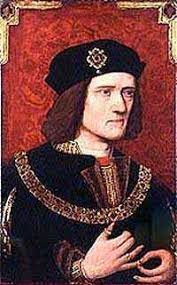
Review of "Richard the Third" by Paul Murray Kendall


by 
 Barckmann's review on Goodreads (5 stars)


I have been reading a great deal since finishing my most recent novel. Digging Around the Pandemic: The SwiftPad Extinction I will try to catch up in my reviews of what I have recently read.

I start here because of a personal connection. My last class at the University of Kansas before graduating in 1973 was an evening Shakespeare Seminar (wine and beer were served) led by Dr. Paul Murray Kendall (at his house). It was the most inspiring university class I ever took. Dr. Kendall was funny, a great teacher, he made us talk and write and he drew us into Elizabethan London. He made the plays come alive. Sadly, that class was the last one Dr. Kendall would ever teach, as he died of heart failure in the summer of 1973.

I only recently read his masterpiece, the biography of Richard the Third. It was a treat to "hear" his voice again! Kendall digs into the minutia of Richard's life, and for late 15th Century England. He has sympathy for Richard. What's more, (I know first hand his deep reverence for Shakespeare), he disagrees with many of the Bard's depictions of Richard's character.

For instance, he disagrees with Shakespeare about Richard's marriage to Anne Neville, daughter of the Earl of Warwick, and widow of Edward, the only son of Henry the VI, both of whom were killed in a battle against the York faction led by Richard. In the play, Shakespeare wrote some of his best lines as he seduced Anne "Was ever woman in this humor wooed? Was ever woman in this humor won? I'll have her, but I will not keep her long." In actual fact, says Kendall, Richard and Anne were really in love, (and he did not seduce her in the morgue where her husband and father lay dead from their wounds, as the Ian McKellen production of the play showed). Kendall proves this to my satisfaction with evidence. As to the killing of the young Princes, well Kendall throws up some doubt as to Richard's guilt but does admit it was probable that he ordered it. In any event it is great history. As anyone who had tried to untangle the complexity of the War of the Roses knows, you can spend your life studying it and never reach the bottom. This was not "popular" history, but a strict, if highly readable, (as well as extensively sourced) academic work. If you want a great read about the end of the War of Roses, Kendall's "Richard the Third" maybe the best place to start.